Oil Extractor vs. Drain Plug: Is Topside Oil Extraction Any Good?
How dipstick-tube oil extractors work, which engines they suit, what they leave behind, and the pumps worth buying.
Reviewed by Michael Koster · Updated October 2026
How it works
An extractor is a vacuum canister with a thin tube. You warm the engine, feed the tube down the dipstick hole to the bottom of the pan, pump the handle (or connect shop air) and the vacuum pulls the oil up into the tank.
The car never leaves the ground. No jack, no stands, no drain plug, no crush washer, no oil on the driveway.


Does it get all the oil out?
On engines with a dipstick tube that reaches the lowest point of the pan, extraction removes as much as draining, sometimes a little more, because it pulls from the sump rather than from the plug’s height.
On engines with a short or offset tube, a few ounces stay behind. The practical difference over a 5,000-mile interval is small, but if you are chasing a perfect change, drain it.
Warm oil matters. Cold 5W-30 moves through a 6 mm tube slowly; extraction after a short drive is far quicker.
Which cars suit it
German and Swedish makes (BMW, Mercedes, Porsche, Volvo) were designed for topside extraction and dealers do them this way. The same goes for most boats and generators.
Toyota, Honda and most domestic engines extract fine too; the only no-go is an engine with no dipstick tube at all (some newer BMW and Mercedes models use a sensor), where you need a drain plug or the oil-filter-housing drain.
Extractors also empty brake master cylinders, power-steering reservoirs and coolant overflow tanks, which makes them useful beyond oil changes.
You still have to deal with the filter
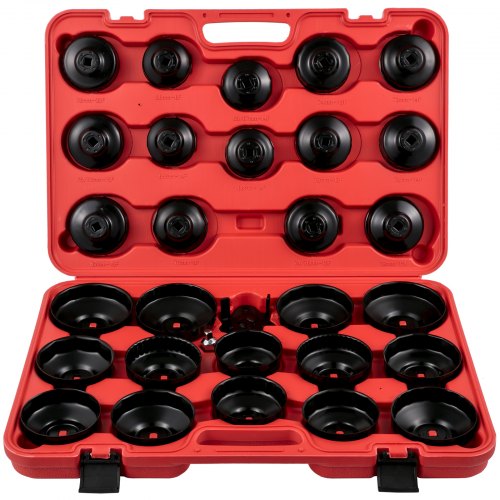
Many cars with cartridge filters mount them on top of the engine, which makes a full topside oil change possible. If your filter is underneath, you are going under the car anyway and a drain pan is the simpler tool.



Which extractor
Capacity above your sump: 6 liters covers cars, 8 to 15 liters covers trucks and lets you do two cars before emptying.
A manual pump is enough for one car; a pneumatic or hybrid unit is faster if you already own a compressor.
Vevor’s large pneumatic/manual extractors are a lot of tank for the money. Pela and Mityvac are the proven hand-pump units if you want a smaller, simpler tool.


- The DIY Oil Change Tool Kit: What You Actually Need
- Floor Jack vs. Ramps vs. Jack Stands: How to Lift Your Car Safely
- Do You Need a Torque Wrench for an Oil Change?